Tesamorelin copies a brain hormone and lasts longer.
Researchers wanted their drug to make the growth gland release more hormone. Two Phase 3 studies, the late test of whether a drug helps and stays safe, and a 2026 review reached the same finding for people in HIV care: less fat deep inside the belly.
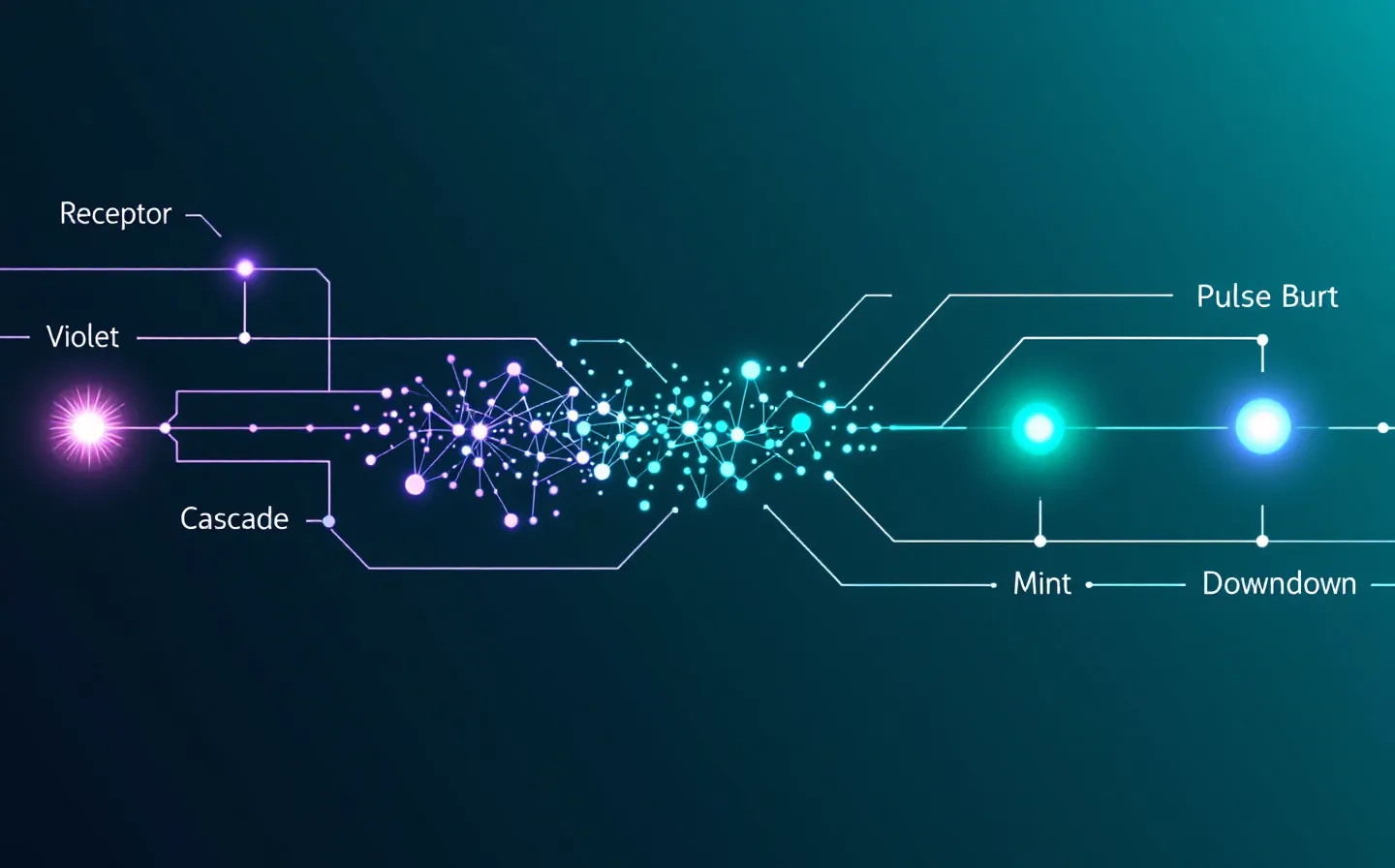
What tesamorelin asks your body to do
Researchers made tesamorelin from a hormone sent by the brain. The pituitary, the pea-size growth gland below your brain, reads that hormone as the body’s call for a rise in growth hormone. The makers changed the drug so it stays in blood longer. Tesamorelin isn’t growth hormone. Your gland releases its own growth hormone in short bursts. That rise leads your liver to produce IGF-1, a growth protein doctors can check in blood. Together, these hormones help the body use the fat packed around inner organs.
What surprised me was how narrow the best proof is. In one large study, deep belly fat fell 15.2% after six months [1]. Every adult in that study had a change in fat storage caused by HIV care. The study can’t promise you the same benefit if your health is different.
What the makers changed in tesamorelin
The makers began with a 44-amino-acid human hormone, a chain built from small protein parts. The hormone prompts the pea-size gland, and growth hormone then rises in the blood. They added a small chemical piece at one end [7]. The chemical shield blocks an enzyme, a blood substance that would cut tesamorelin apart within minutes [7].
Here’s what that means for you: tesamorelin stays intact until it gets to the pea-size gland below your brain. Your gland then sends out its own growth hormone in brief rises [4]. A tesamorelin shot isn’t a growth-hormone shot.
More people have taken part in tesamorelin studies than in studies of many similar lab-made drugs. Even so, the clear benefit belongs to people whose HIV care changed fat storage.
What tesamorelin changed in the main trials
The largest trial followed 412 adults whose HIV care had changed fat storage; this 26-week Phase 3 study was a late test of the drug’s benefit and harm. Chance placed each person in a group. The tesamorelin group received 2 milligrams each day. Scans showed its deep fat had fallen 15.2%. The placebo group got a shot with no drug, and its fat rose 5.0% [1]. A placebo, or no-drug shot, helps show whether tesamorelin caused the gap. Blood fat fell 50 milligrams per deciliter with tesamorelin; a deciliter holds one-tenth of a liter. The placebo group instead had a rise of 9 milligrams per deciliter. IGF-1, a growth protein checked in blood, rose 81.0% [1].
A 52-week study found deep belly fat still 18% below its starting amount. Blood sugar had not changed enough to alter care [2]. The soft layer under the skin barely changed. The usual height-and-weight number also moved little [3]. In a 2026 review, researchers put five trials together. The combined result showed drops in both the deep-belly and liver-fat measures. People also kept more muscle and other tissue. Reviewers reported no serious harm [14].
For you, the limit is firm: everyone in those fat studies was receiving HIV care.
Results differed from person to person. Across two Phase 3 trials—late studies meant to check the main benefit and watch for harm—543 people received tesamorelin and 263 received placebo. The target was less than 140 square centimeters of deep fat on one scan image. The mark is an area shown by the scan, not an amount taken from a body. More people taking tesamorelin got below the target. The study’s 95% test said a gap that large would rarely arise by chance, but it couldn’t tell you whether you would respond [13]. People with higher blood fat or a cluster of sugar-and-heart-risk problems responded more often. White people also responded more often. No clue at 3 months told doctors who would benefit. After 26 weeks, the fat left on scans looked denser. Denser fat on a scan is often linked with fat cells that store and use fuel in a healthier way [12].
What tesamorelin is approved to treat
The FDA approved tesamorelin in 2010 for one use [5]. It may reduce extra deep belly fat in people whose HIV care changed where their bodies store fat. Ordinary weight loss lies outside the approval, as do efforts to slow age, change body shape, treat other kinds of fatty liver, or help memory.
You may hear that tesamorelin has no approval. That’s wrong. The approved medicine needs a prescription, with approval confined to this use. A compounded tesamorelin preparation has no FDA approval. Lab-only material isn’t the prescription medicine given to patients. Its stated strength and cleanliness do not get equal checks.
A government liver review gave the drug a score of E. In plain terms, liver injury looked unlikely, and no trial case was traced to tesamorelin [5]. That finding can’t tell whether the drug fits your health. Read the tesamorelin side effects or the questions about tesamorelin for the known limits.
What tesamorelin has not proved
Strong studies support one use: lowering deep fat in people whose HIV care changed where their bodies store fat. Other proposed uses still need good human trials. Researchers haven’t tested ordinary weight loss in a large group without HIV. The studies also can’t tell you whether cancer becomes more likely after years of use, because the drug raises IGF-1, a growth-related blood protein.
The benefit may fade. Fat near the organs started building up within weeks after the last dose [2]. Sport bans also include tesamorelin [15]. Keep these limits in mind when you compare a claim with your own health.